
Charlotte was four years old when she came running to tell me that Hugo's tail was low and his ears were back, and maybe he didn't want to play right now. She'd been throwing a ball for him in the garden, and something in his body language told her to stop.
Hugo, it turned out, had pulled a muscle in his shoulder that morning. He hadn't yelped or limped - he was simply uncomfortable, and my four-year-old read that discomfort before I did. That moment crystallized for me what I'd been trying to teach her: not just rules about dog safety, but actual understanding of the animals she lived with.
Raising children alongside giant breed dogs is an education for everyone involved. The dogs learn to be patient with small, unpredictable humans. The children learn to read body language, respect boundaries, and form relationships based on mutual understanding rather than treating dogs like living toys. Done well, it produces kids who are genuinely safe around dogs and dogs who are genuinely trustworthy around kids.
Body Language Before Words
Charlotte learned dog body language before she could read books. We started when she was about two, using simple picture books about dogs and pointing out emotions. "See how this dog's mouth is open and relaxed? He's happy. See how this dog's ears are flat back? He's worried."
At two, she couldn't name these states herself. But by three, she could identify happy, worried, tired, and excited dogs with reasonable accuracy. By four, she was reading Hugo's subtle signals that even I sometimes missed. By six, she was teaching her friends how to approach strange dogs.
Oliver is going through this same progression now at five. Yesterday at the park, a child ran screaming toward a leashed dog. Oliver held back, even though the dog looked friendly, because the owner seemed tense and the dog's tail was stiff rather than wagging loosely. He told me afterward that he could tell the dog was nervous. He's five. This is learnable. Our comprehensive guide on child safety with large breeds covers the practical rules that make this learning possible.
The key is consistency and repetition. Every single time we saw a dog for the first two years, I narrated what I saw in the dog's body. "Look at that dog's tail - it's wagging but it's held up high and stiff. That dog might be excited but not relaxed. Let's give that dog space." Over and over, until the observation became automatic.
Signs We Teach First
Relaxed and happy: loose wiggly body, open relaxed mouth, soft eyes, loose wagging tail. Worried or uncomfortable: ears back, tail low or tucked, yawning when not tired, lip licking, turning head away. Telling you to back off: stiff body, hard stare, lifted lip, growling, showing teeth. The last category means immediate retreat and calling an adult - no questions, no hesitation.
Rules That Become Instincts
We have non-negotiable rules about dog interaction. They've been consistent since before Charlotte could walk, and they're so embedded now that she follows them without thinking.
Never disturb a sleeping dog. If Hugo is asleep in the hallway, you walk around him. You don't step over him, you don't touch him to wake him, you don't put your face near his. Startled dogs can react before they're fully awake, and teaching children to give sleeping dogs space eliminates an entire category of risk.
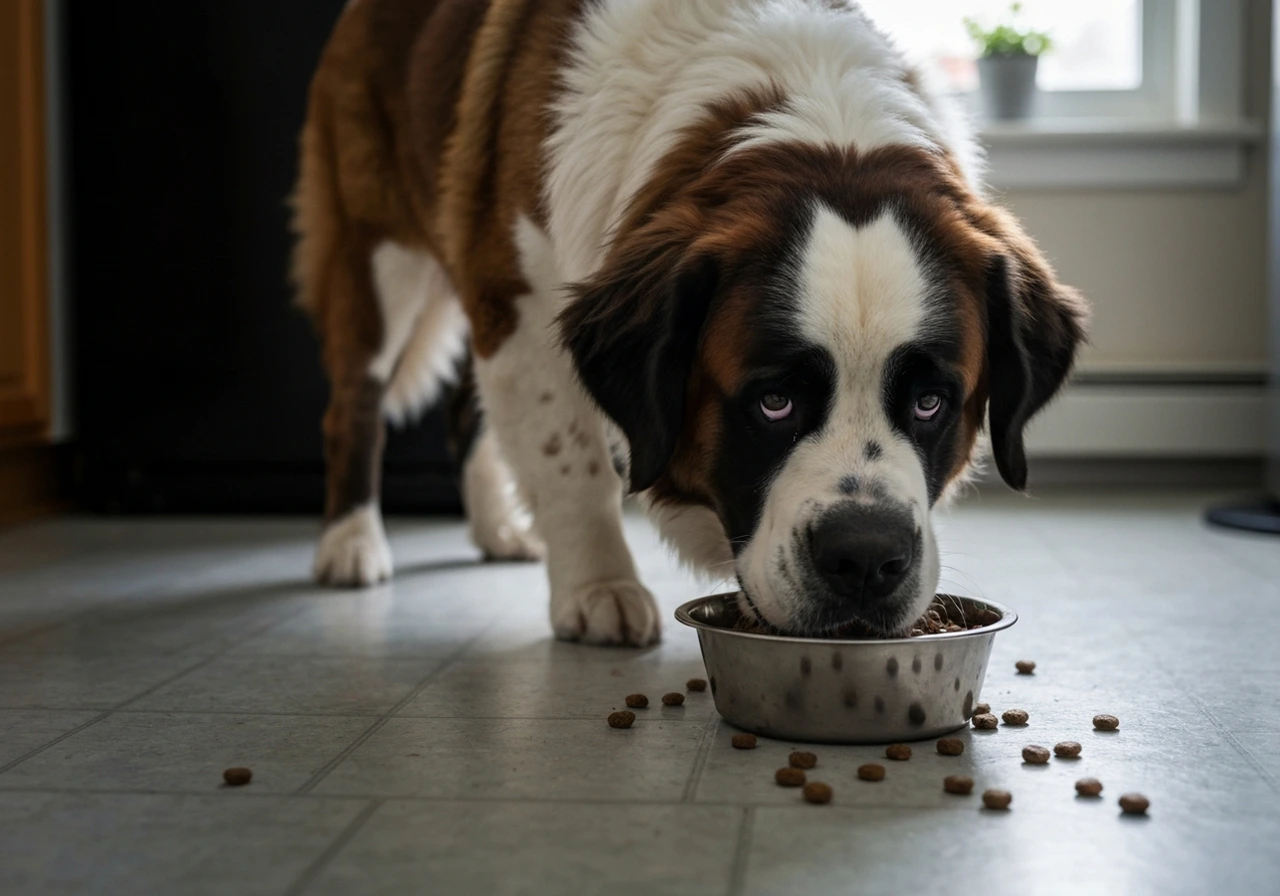
Never approach a dog who is eating. Mealtime is private time. The dogs eat in a separate room, and the door stays closed until they're finished. The children don't enter that space while food is present. This rule exists even though our dogs have never shown food aggression - we're not testing them, we're eliminating the opportunity for problems.
Never chase a dog who is walking away. If a dog removes themselves from an interaction, that communication is complete. Charlotte learned early that when Hugo stands up and walks away, playtime is over. She doesn't follow him, doesn't try to re-engage. She lets him go. This teaches respect for the dog's agency and prevents escalation situations where a dog feels pursued and cornered.
Let the dog come to you. When meeting new dogs, we stand still and let the dog approach. If the dog doesn't approach, we don't force interaction. This rule applies even with our own dogs - if Bear is in his bed and not offering to come over, Charlotte doesn't go to him. She invites him verbally, and if he doesn't come, she leaves him alone.
Supervised Interaction, Not Separated Lives
Some parents respond to concerns about dogs and children by keeping them completely separate. I understand the impulse, but I think it misses the point. Children who never learn to interact appropriately with dogs don't develop the skills they need, and they're at higher risk when they inevitably encounter dogs elsewhere in their lives.
Our approach is supervised integration. When Charlotte was under four, I was within arm's reach whenever she was with the dogs. I could intervene physically if needed, and I was constantly narrating appropriate behavior. "Good job giving Hugo space while he drinks water. See how you're petting his back, not his face? That's exactly right."
As she grew and demonstrated understanding, supervision became less intensive. Now at eight, Charlotte can be in the same room as the dogs while I'm in the kitchen. I can hear what's happening, and I check in regularly, but I don't need to be physically present every second. She's earned that trust through years of appropriate behavior. This trust-building process works alongside proper socialization of the dogs themselves.
Oliver, at five, is still in closer supervision mode. He's more impulsive than Charlotte was at that age, more likely to move suddenly in ways that could startle a dog. So I maintain closer physical proximity with him, and we'll maintain that until he demonstrates the same consistent understanding his sister has.
The Responsibility Progression
Dogs teach children responsibility, but only if you design the teaching deliberately. We've created an age-appropriate progression of dog-related chores that helps both kids develop ownership over the dogs' wellbeing.
At three, Charlotte could help fill water bowls (with supervision). At five, she could measure food into bowls and call the dogs for meals. At seven, she started helping with basic grooming - brushing coats under supervision. Now at eight, she's responsible for checking water bowls throughout the day and helping with post-walk paw cleaning.
Oliver is starting the same progression. He helps fill water bowls now, and he's learning to measure food. He takes immense pride in these contributions, announcing regularly that he "took care of the dogs today."
The key is starting small and building gradually. A child who's overwhelmed by responsibility learns to resent it. A child who masters small responsibilities and sees their contributions valued learns to embrace more.
The Moment I Knew It Worked
Last summer, Charlotte's school friend came over and immediately ran at Hugo, arms outstretched, squealing. Hugo stayed calm because Hugo is a saint, but I watched Charlotte intercept her friend before she made contact. "Wait," she said. "You have to let him sniff your hand first, and see if he wants to say hello." She positioned her friend appropriately, coached her through a proper greeting, and then supervised their interaction for the next ten minutes. I didn't say a word. She had completely internalized everything we'd taught her and was now teaching others. I may have cried a little.
When Things Go Sideways
Despite everything we do, things occasionally go wrong. Oliver once accidentally stepped on Bear's paw and Bear yelped and jumped away, bumping Oliver and knocking him down. Oliver cried. Bear was confused and worried. Everyone was briefly upset.
How we handle these moments matters enormously. We don't punish the dog for reacting naturally. We don't tell the child they're bad for making a mistake. We narrate what happened ("You accidentally stepped on Bear's foot, and that hurt him, so he moved away quickly. That's why you fell."), check everyone for injuries, and model the recovery. Oliver apologized to Bear. Bear received reassurance. Everyone calmed down. Life resumed.
Children who grow up with dogs will have these moments. The goal isn't to prevent them entirely - it's to handle them in ways that don't create lasting fear or resentment on either side.
What We're Actually Teaching
The surface level is dog safety. But underneath that, we're teaching something much bigger: how to read and respect the needs of another living being. How to adjust your behavior based on someone else's comfort rather than just your own desires. How to build relationships through patience and mutual understanding rather than force.
Charlotte and Oliver will carry these skills into their relationships with all animals, and probably with humans too. The empathy required to read a dog's body language and respond appropriately is the same empathy that helps in friendships, partnerships, parenting.
Dogs teach children about love that isn't conditional on performance. Hugo doesn't care if Charlotte gets good grades or cleans her room. He loves her because she's his person. That unconditional acceptance is powerful for a child to experience, especially during the years when so much of childhood is about achieving and being evaluated. This bond is part of why big dogs make such wonderful family companions.
And giant breeds, in particular, teach children that size isn't what makes something frightening. Charlotte is completely unintimidated by large dogs because she's grown up knowing that the biggest creatures in her life are also the gentlest. That recalibration of assumptions will serve her well.
For more on the unique joys of raising children with gentle giants, read our piece on why big dogs make the best family dogs. Understanding child safety considerations provides the practical framework for everyday interactions.
To understand more about the genetics and heritage behind what makes these dogs who they are, The Herding Gene offers fascinating resources on canine behavior and breeding history.
As your children grow alongside your gentle giant, daily life with a giant breed evolves into a beautiful partnership that benefits everyone in the family.